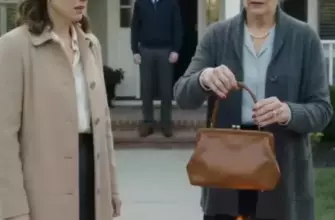
At Easter dinner, my daughter-in-law pulled my chair away from the table in front of twelve people and laughed, “I love that she still thinks she belongs here.”
Then she looked at my son.
He said nothing.
That silence broke something inside me.

I drove home with the coconut cake I had baked for them sitting untouched beside me. I had spent years believing that loving your children meant helping them whenever they needed you.
That night, I finally opened my laptop and looked at the truth.
My name is Pauline Wakefield. I’m sixty-three. I spent thirty-one years as a school librarian, raised my son after his father died, paid off my home, protected my pension, and built a modest savings account.
I was never rich.
But I had stability.
When Derek married Brianna, I welcomed her. When they wanted a beautiful house but needed help with the down payment, I gave it. When the HVAC broke, I paid. When taxes were short, I covered them. I co-signed their SUV and even added Brianna to one of my credit accounts.
“Only for emergencies,” she promised.
Then I noticed the charges—spa weekends, designer bags, expensive dinners, salon appointments and luxury purchases.
I kept telling myself it was family.
Until Easter.
When Brianna humiliated me, I looked at Derek, hoping he would defend me.
He looked down.
So I quietly picked up my purse, took my cake, and walked out.
At home, I didn’t cry.
I made a decision.
I removed Brianna from my credit card. I canceled the HOA and landscaping payments. I pulled out the SUV paperwork.
My name was on the lease.
The next morning, Derek called.
“Mom, the card isn’t working.”
“I removed her.”
Silence.
“She didn’t mean it,” he said.
“She pulled my chair away from the table, Derek.”
Still silence.
Then Brianna said, “You’re punishing us over one comment?”
“No,” I replied calmly. “I’m finally making decisions about my own money.”
“But we have a lifestyle.”
I almost laughed.
“Then you’ll have to pay for it yourselves.”
Two days later, Derek came to my house.
“You changed the locks.”
“Yes.”
He stared at me.
“I’ve spent years fixing things for you because I love you,” I told him. “But your wife told everyone I didn’t belong at your table, and you stood there.”
His eyes fell.
“One sentence would have been enough,” I whispered.
Before he left, I handed him the SUV papers.
“When the lease ends, my name comes off.”
“But this is going to cause a huge problem.”
I looked at him.
“That problem is no longer mine.”
And as I watched his car disappear, I finally understood:
My son being uncomfortable does not automatically make his problems my emergency.
Full story in the comments 👇
Three weeks passed before Derek called again.
This time, his voice was different.
There was no anger. No excuses.
“Mom, I owe you an apology.”
I sat quietly, listening.
“Brianna and I had to sell some things. We canceled the wine subscription. We’re cutting back. We’re finally looking at what we can actually afford.”
I didn’t say, “I told you so.”
I simply asked, “Are you okay?”
He sighed.
“We will be.”
Then he said something I never expected.
“You were never unwanted at our table, Mom. I just let my fear of upsetting Brianna make me a coward.”
Those words brought tears to my eyes.
Not because they erased what happened.
They didn’t.
But because, for the first time, my son understood that silence can wound just as deeply as cruelty.
A month later, Derek came over alone.
He brought a small box.
Inside was a photograph of him and his father from when Derek was nineteen.
“I found this in an old drawer,” he said. “I thought you should have it.”
I held the picture against my chest and cried.
We hugged for a long time.
I forgave him—but forgiveness did not mean returning to the way things had been.
I still loved my son.
I simply stopped confusing love with sacrifice.
My house was quiet that evening.
I made myself a coconut cake.
This time, I ate the first slice at my own table.
And somehow, it tasted sweeter than ever.
Because I finally understood something:
You can love your family with your whole heart and still refuse to let them break it.
And sometimes, the most powerful way to teach someone your worth is to stop paying the price for their disrespect.