Our daughter’s twin sister died at nine days old and we hid it for 18 years — At her party my husband brought something from the garage and said, “I started it the night she died.”
Rosie was eleven minutes younger. Six pounds, one ounce. The coroner called it SIDS. No one was to blame. Somehow, that made the grief even harder to carry.
I dismantled the second crib myself while my husband was at the funeral home. I remember standing in the garage, taking it apart piece by piece, as if removing the crib could somehow erase what had happened.

We told ourselves Hannah was too young to understand. Then she turned five. Then twelve. Then eighteen. There was always another reason to wait. Another excuse to protect her. And every year, the secret became heavier.
My mother took Rosie’s hospital photograph off her wall. My sister learned never to say her name at Thanksgiving.
Once a year, usually while we were driving, my husband would quietly say, “She has a right to know.”
And I would whisper, “Know what? That she’s the one who survived?”
He never argued. He just went silent.
I had held two babies for nine days. For eighteen years, I was the only one in our home still counting.
Every September 9th, there were two birthdays. One had candles. The other had silence.
That evening, after Hannah’s birthday dinner, my husband always disappeared into the garage for an hour. I never asked why. I thought he needed the quiet.
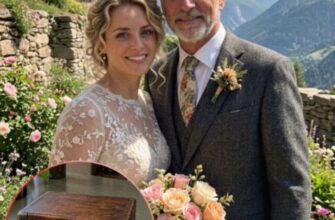
Then, at Hannah’s eighteenth birthday party, he came back from the garage carrying something I had never seen before.
He placed it in front of her.
Then he told her the truth.
She had never been born alone.
He told her Rosie’s name.
Hannah stared at him, frozen.
She didn’t cry. She didn’t ask why we had lied.
My husband swallowed hard and said, “I started this the night she died.”
Hannah slowly reached out and placed both hands on it.
And in that moment, eighteen years of silence finally broke.
Full story in the comments 👇👇
Hannah slowly lifted the lid.
Inside was a small wooden box, worn smooth around the edges. Beneath it lay photographs, hospital bracelets, a tiny knitted hat, and a stack of letters tied together with a faded blue ribbon.
Her fingers trembled when she picked up the first photograph.
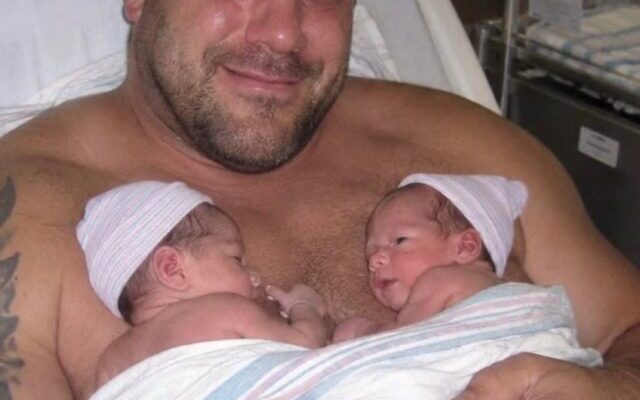
Two newborn girls.
One was Hannah.
The other was Rosie.
For a long time, nobody spoke.
Then Hannah looked at us and whispered, “Why didn’t you tell me?”
I couldn’t find the words. My husband reached for her hand.
“Because we were afraid,” he said. “We thought knowing her might make you feel like something was missing. We thought we were protecting you.”
Hannah’s eyes filled with tears.
“You weren’t protecting me,” she said softly. “You were keeping my sister from me.”
That sentence broke something inside me.
I began to cry. I told her everything—the nine days, the funeral, the empty crib, the birthdays I couldn’t celebrate, and every September 9th I had spent pretending one candle was enough.
She listened without interrupting.
Then she picked up the smallest photograph and held it against her chest.
“She was real,” she whispered.
“Yes,” I said. “She was.”
Hannah wiped her tears and looked at her father.
“So you built this for her?”
He nodded.
“For eighteen years,” he said. “Every September 9th. I needed somewhere to put all the things I couldn’t say.”
Hannah stood, walked around the table, and hugged him.
Then she reached for my hand.
“Next year,” she whispered, “we light two candles.”
And for the first time in eighteen years, September 9th no longer felt like a day we had to survive.
It felt like a day we could finally remember.