Seven years ago, my husband left at sunrise with our twin sons for a fishing trip and never came back. Everyone said they drowned. No bodies were ever found, but the lake gave us just enough to believe it anyway: an empty boat, life jackets still inside, silence where there should have been voices.
I learned to live inside that silence.
It has been seven years since Ryan walked out of this house with Jack and Caleb, promising they’d be home before dinner. Seven years of checking the front door at every sound, of imagining three sets of footsteps that never arrived.
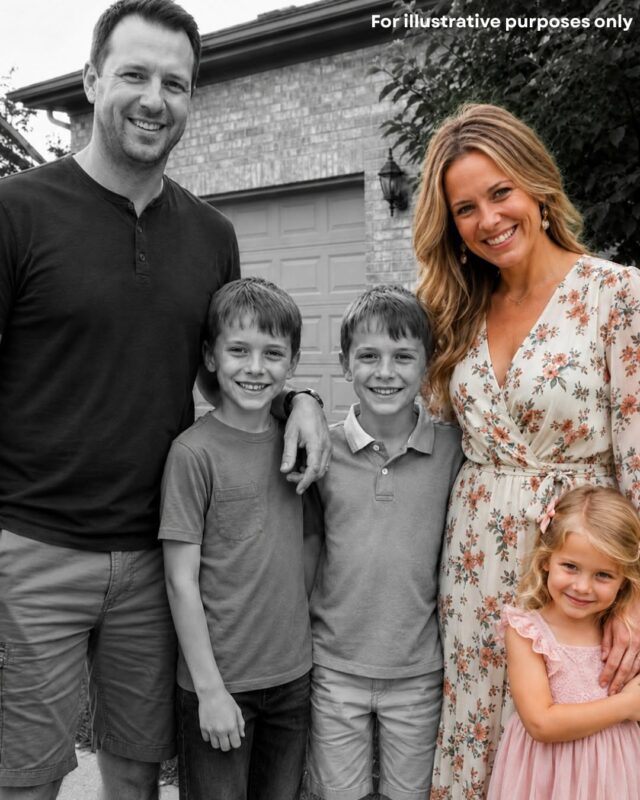
Now it’s just Lily and me. She’s thirteen—quiet, watchful, shaped by a childhood built around absence. I kept going for her, because there was no other choice.
The boys’ old room never really changed. Sometimes I still see them there—nine years old, arguing over fishing rods, laughing too loudly, alive in a way I couldn’t stop replaying.
Every summer, Ryan took them to Lake Monroe. Just father and sons. Lily always asked to go. Every year, he told her, “Next time, Peanut.”
But next time never came.
That morning didn’t feel like a beginning of anything terrible. It felt ordinary. Coffee brewing. Kids arguing over clothes. Ryan teasing Jack. Caleb laughing. A kiss on Lily’s forehead. A promise: “Back before dinner.”
Then they were gone.
By afternoon, I was checking the clock too often. By evening, calling without answer. By night, driving to the lake with neighbors already fearing what we would find.
We found the boat first.
Empty.
No Ryan. No boys. Just drifting water and untouched life jackets.
I screamed until my voice broke.
The search lasted days. People eventually stopped calling it a mystery. They called it an accident. A drowning. A closed case the lake would never return.
But I never accepted what had no proof.
So I waited in my own way. I went back to the lake. I sat in the car staring at water that gave nothing back. I stopped only when I couldn’t stand the weight of hoping anymore.
I removed their photos because smiling faces hurt more than absence.
And still, life continued.
School runs. Lunch boxes. Bills. A child growing up beside a mother who never stopped waiting.
Then last weekend, everything broke open again.
Lily found an old phone in a forgotten box. It still worked. And inside it, she found a video.
A message from Ryan.
Continued in the first comment 👇👇
She stood in the doorway shaking when she told me.
“He said not to show you,” she whispered.
I watched it with a feeling I couldn’t name—like something inside me had already begun collapsing before I even pressed play.
Ryan’s face appeared. Filmed in the garage.
“Anna,” he said. “By the time you see this, enough time will have passed…”
Then he said the words that erased everything I thought I knew.
He hadn’t drowned.
He had taken the boys to their biological mother.
He was dying. Stage four cancer.
And he had decided, without me, that I would be spared the truth.
Or punished by it.
The video ended.
And I realized seven years of grief had been built on a decision I never got to understand, let alone accept.
The next morning, we drove 235 miles.
Ryan’s ex-wife opened the door like she had been waiting for something like this to happen. When she saw the phone, she let us in.
Inside her home were photographs I didn’t expect to survive seeing: Ryan alive in memory, smiling with her, and Jack and Caleb—older now, unmistakably real.
Not drowned.
Not gone.
Just elsewhere.
The truth hit like impact without sound.
We went with her to a cemetery outside town.
That’s where she told us the rest.
Ryan hadn’t taken them out of cruelty or escape.
He had been sick.
He had been trying to prepare a life for them after he was gone—trying, in the way dying people sometimes do, to rearrange pain so it lands somewhere else.
He believed he was protecting me.
What he actually did was remove every choice I had.
And let me live inside a story that wasn’t true.
I stood in front of his grave and couldn’t reconcile the man I loved with the decisions he made.
Because I raised those boys. I loved them as mine. And he still decided I didn’t deserve to know where they were.
Later, we learned they were in boarding school abroad. Safe. Living. Growing up without me.
They asked about me at first, she said. Then time softened the questions into acceptance.
He had managed even that part. He had shaped their grief too.
In the end, she gave me an envelope—his letter, and something he left behind for the future he wouldn’t see.
I haven’t opened all of it yet.
I don’t know if I will ever forgive him.
Maybe I will understand, someday, what fear makes people do when they think they’re running out of time. But understanding doesn’t undo seven years of loss built on something I was never told.
Because that’s what this really was.
Not just grief.
False grief.
A life built around a disappearance that wasn’t what it seemed.
On the drive home, Lily asked if she would ever know her brothers.
I told her the only honest thing I could.
“I think there’s still hope.”
But hope feels different now.
Because I’m no longer waiting for the front door to open.
And I’m no longer living inside the story I was given.
For the first time in seven years, I’m learning to grieve what actually happened.