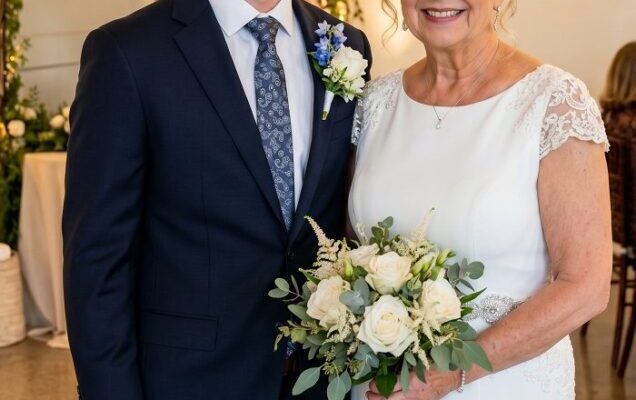
I married a lonely older woman for her money and a roof over my head. After her funeral, her lawyer handed me a box and said, “She said this is what you really WANTED.”
Evelyn was 71.
A widow.
Quiet, gentle, and alone.

She owned a beautiful home in a peaceful neighborhood, and when she offered me stability, I took it without hesitation.
I didn’t marry her for love.
I married her because I was desperate.
My plan was simple: be the caring husband, wait a few years, inherit the house, and finally leave my struggles behind.
What I never considered was that Evelyn might understand my intentions better than I did.
Yet she never treated me with suspicion.
Only kindness.
She cooked dinner every night. When my boots wore out, she replaced them. One freezing morning, I found a brand-new coat hanging by the door because she’d noticed mine could barely keep out the cold.
“You’ll freeze in that thing,” she said with a smile.
But I barely appreciated any of it.
To me, she wasn’t really a wife.
She was an opportunity.
Every doctor’s appointment caught my attention. Every prescription on the counter reminded me that one day everything she owned would belong to me.
Looking back, I’m ashamed of the person I was.
Then one morning, Evelyn collapsed in the kitchen.
Three days later, she was gone.
At her funeral, her relatives looked at me with open contempt.
“Gold digger.”
“He got exactly what he wanted.”
And honestly, I thought they were right.
Until the will was read.
The house went to her niece.
Most of her savings went to charity.
I got nothing.
Not a dollar.
Not a single possession.
Then the lawyer reached beneath his desk and placed an old shoebox in front of me.
My name was written across the lid in Evelyn’s careful handwriting.
“What is this?” I asked.
The lawyer looked at me quietly.
“She told me to give you this,” he said. “She said it’s what you really wanted.”
My hands shook as I lifted the lid.
And the very first thing I saw inside made my heart stop. 👇👇👇 I opened the box.
On top was a folded paper. When I opened it, my stomach dropped.
It contained my text to Jesse:
“All good. Once she’s gone, I’m set.”
“Where did she get this?” I asked.
“She saw it on your phone and wrote it down,” Mr. Carson said. “She wanted to see what you’d do without being caught.”
Beneath it were receipts—for boots, a coat, repairs, dental work, and credit cards. Each had a note from Evie:
“You lied about this.”
“You thanked me for this.”
“You almost told the truth here.”
The last receipt was for the coat I wore to her funeral:
“You looked ashamed when I saw you were cold. That was the first honest thing on your face.”
Then Mr. Carson handed me a letter.
Evie wrote that she had always known why I married her—even about the text. But she also remembered the small acts of kindness I’d shown. She said I wasn’t good or honest, but I wasn’t empty either.
At the end, she gave me a choice:
Take the box and disappear, or tell the truth.
The next day, at a fundraiser she had created, Mr. Carson read her final message. Every eye turned to me.
I stood and confessed.
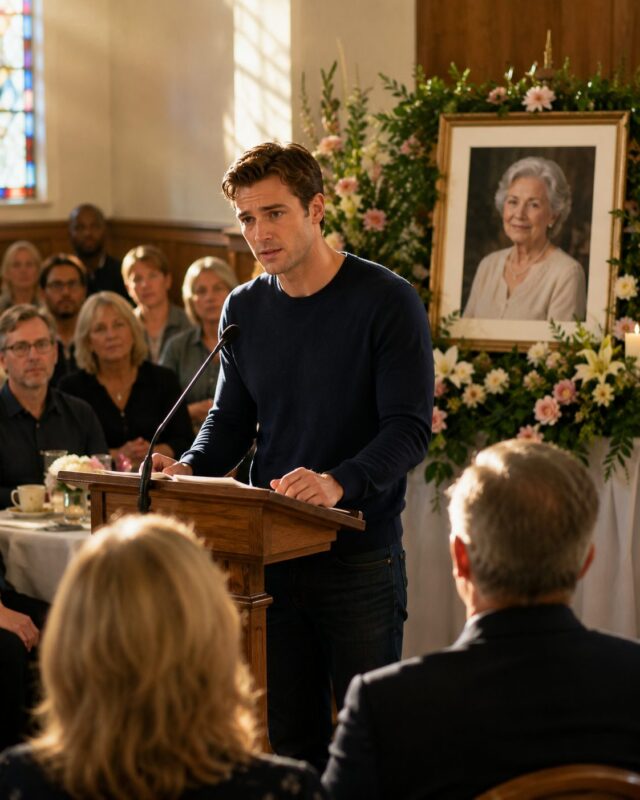
“I married Evie because I was broke, scared, and selfish. I thought her money was my way out. She saw my text, and somehow still gave me a chance to be honest.”
When told the fund would carry my name, I refused.
“Put her name on it,” I said. “I haven’t earned that honor.”
Six months later, I was volunteering at the church and slowly repaying what I owed. Claire asked why.
“Because she’s not here to make me,” I said.
That evening, I visited Evie’s grave. I tore up the copy of the text message and held the pieces in my hand.
“I won’t leave my shame here,” I said.
I married Evie because I wanted her life.
In the end, she made me earn my own.