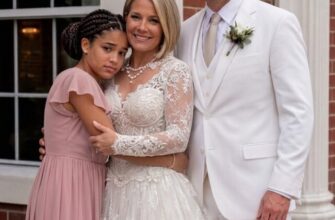
I chose to save our daughters instead of my wife, and the guilt has been slowly destroying me ever since. For three long months, her mother refused to speak to me. Then, one day, she appeared at my doorstep, holding an envelope and carrying a truth that would change everything. She looked at me and whispered, “There’s something about my daughter I can’t keep hidden from you any longer.”
My wife’s mother didn’t say a single word to me for three months. Not at the funeral. Not in the painful days that followed. I would send her pictures of our little girls, hoping for some sign that she didn’t hate me, but all I ever received was a cold, simple “Thank you.”
And honestly, I couldn’t blame her. If I had been standing where she stood, I might have hated me, too.
Because when the doctors asked me who they should try to save, I was the one who made the choice.
“Save our babies,” I said, even as my heart begged for another answer.
That morning, Mary and I had been laughing about baby names. She insisted our daughters didn’t need matching names just because they were twins. I teased her that we should have settled that argument months ago. She smiled, rolled her eyes, and asked me to pass her the water.
I never imagined that ordinary moment would become one of my most precious memories.
By evening, I was gripping her trembling hand while strangers spoke in urgent voices around us. Then someone asked me what mattered most, what we wanted them to prioritize.
I looked at Mary, terrified of what the answer might cost us.
“Mary…”
She gently squeezed my fingers.
“Our girls,” she whispered. “Please. Save our girls.”
I wanted to believe there was another way. I waited for someone to promise me that I wouldn’t have to lose her. But no miracle came.
So I agreed.
And that was the last decision Mary and I ever made together.
I returned home carrying two newborn daughters and a bag of her belongings. Inside was the sweatshirt she had worn to the hospital. I still haven’t washed it. Sometimes, I hold it against my chest just to remember what it felt like to have her near me.
Everyone kept telling me to be strong because our daughters needed their father. So I forced myself out of bed. I fed them through sleepless nights, recorded every bottle, and stood beside their cribs, terrified that if I looked away, I might lose them, too.
But when the house fell silent, one question always returned.
What if I had chosen differently?
Then, last Thursday, the doorbell rang.
Mary’s mother stood outside, clutching an envelope with trembling hands. Before she could even step inside, the words spilled out of me.
“I never wanted to lose her. She asked me to save the girls, and I agreed. But I should have done something. I should have found another way. I should have—”
“I know,” she whispered.
“No, you don’t understand. I was the one who said yes.”
She lowered her eyes toward the envelope.
“Do you really think I stayed away because I blamed you?”
I stood frozen, unable to speak.
Then she took a shaky breath and said, “Mary made me promise not to tell you. I thought she would have enough time to tell you herself.”
Full story 👇👇👇
My hands began to shake as I opened the envelope. Inside was a letter written in Mary’s familiar handwriting, the same handwriting I had seen on grocery lists and little notes she used to leave beside my coffee.
“My love,” it began, “if you’re reading this, it means I didn’t get the chance to tell you myself.”
Tears blurred the words.
Mary wrote that she had known about a complication in her pregnancy long before that terrible night. The doctors had warned her that saving both her and the babies might be impossible. She had kept it from me because she wanted our remaining days together to feel ordinary, filled with laughter instead of fear.
Then I reached the sentence that broke me.
“If they ask you to choose, please don’t spend the rest of your life believing you abandoned me. You didn’t. You gave our daughters the chance to live, and I know you would have given anything to keep me, too.”
I sank into a chair, sobbing into the paper.
Her mother sat beside me and wrapped her arms around my shoulders. “She never blamed you,” she whispered. “She was proud of you.”
That night, I tucked the letter beside Mary’s sweatshirt and watched our daughters sleeping peacefully.
For the first time in months, I understood that loving Mary didn’t mean punishing myself for surviving her.
It meant raising the two beautiful pieces of her she had left behind.
And tomorrow, when my girls asked about their mother, I would tell them the truth: she loved them enough to give them life, and their father loved her enough to carry that love forward, every single day.